Everyone who works or lives in Manhattan has thoughts on what happened 11 years ago. Here are mine.
In the 1990s, I was a young guy in my 20s who’d worked for a few years at AT&T in New Jersey, doing all kinds of jobs from Customer Service for their new Internet products (AT&T WorldNet and Easy World Wide Web…anyone remember those?), to product management for their consumer long distance services (anyone remember those?)
In 1999, I got a call from a recruiter for Merrill Lynch in Manhattan asking if I wanted to work in New York City. I jumped at the chance. Being a Frank Sinatra fan, I’ve always taken those words “if you can make it there you can make it anywhere” to heart. I started working at 222 Broadway, one block from the World Trade Center.
I used to take the PATH train from New Jersey into the basement of the World Trade Center every day. For a fresh kid starting out his career, I loved it. On my way to and from work, I’d be sure to spend a little time in the big shopping complex down there. I bought a Meade Telescope from the Discovery Store. I used to check the Warner Bros store to see if they had a certain Michigan J. Frog polo shirt I always wanted. And from time to time, I’d treat myself to a chocolate-covered strawberry at the Godiva at the top of the escalators, sort of my reward to myself for making it “to the big time”. I made a pact with myself that I would try to eat a different ethnic food every day, just because I could–although most of the time I ended up going to the Devon and Blakely at the base of the North Tower, or to my favorite hot dog vendor at the corner right in front of it. They were your standard dirty water dogs, but somehow they tasted absolutely amazing.
Merrill Lynch had a fitness center in the World Financial Center across the street, so I’d have a little ritual each day. I’d leave my office, walk across the street past the church, and climb the steps to the World Trade Center. I’d walk right up to the North Tower and put my hand right on the wall, and then look up as far as the eye could see. It felt like I would touching the sky. Then, I’d walk through the towers back to the financial center, where I’d work out for a little bit before going home.
There was one meeting I was invited to that was held in the Windows of the World at the very top of the World Trade Center. I remember wanting desperately to look out the windows and just gaze at the beautiful panoramas, but because I was there on business I had to act professional. But I thought to myself, I can always come back.
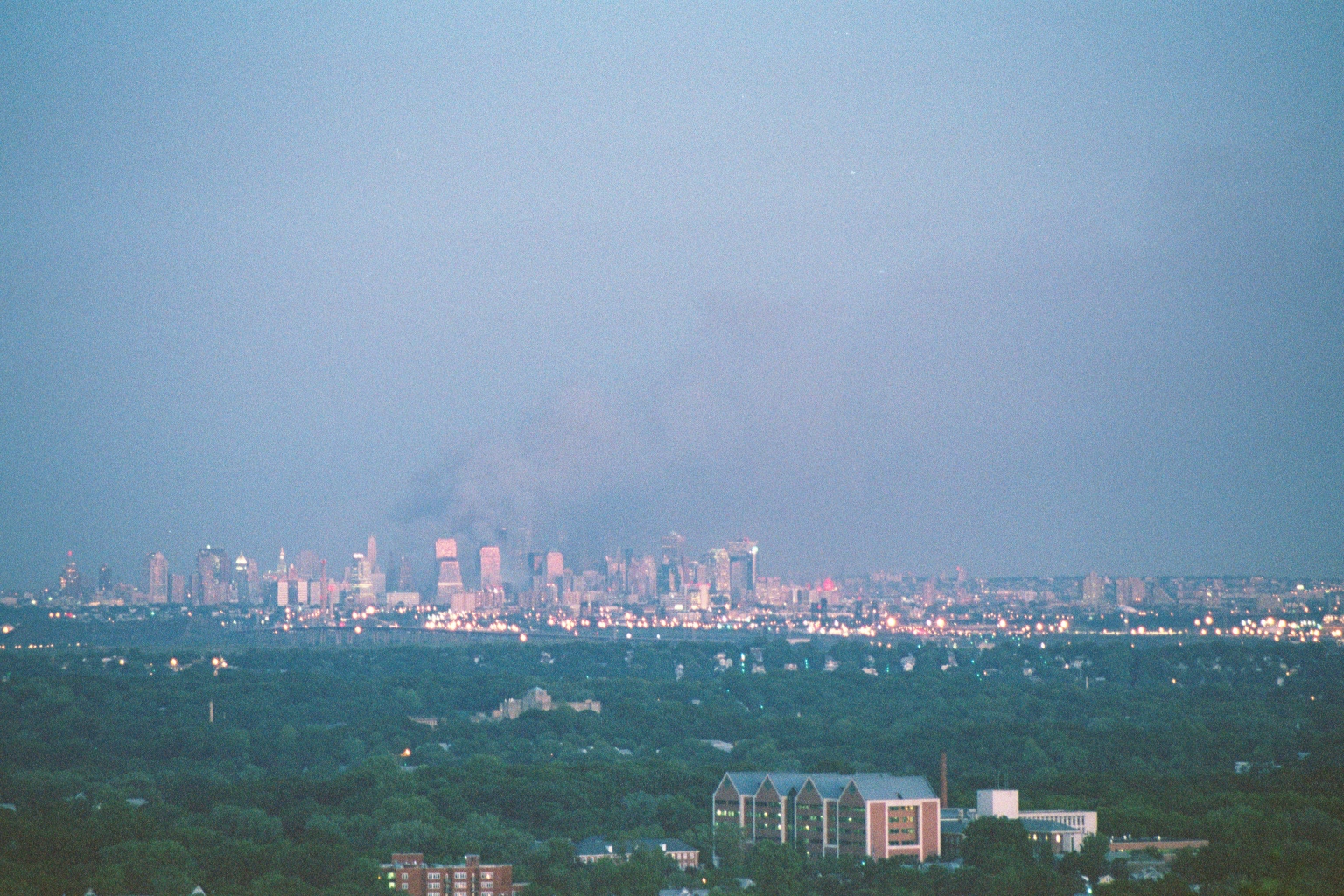
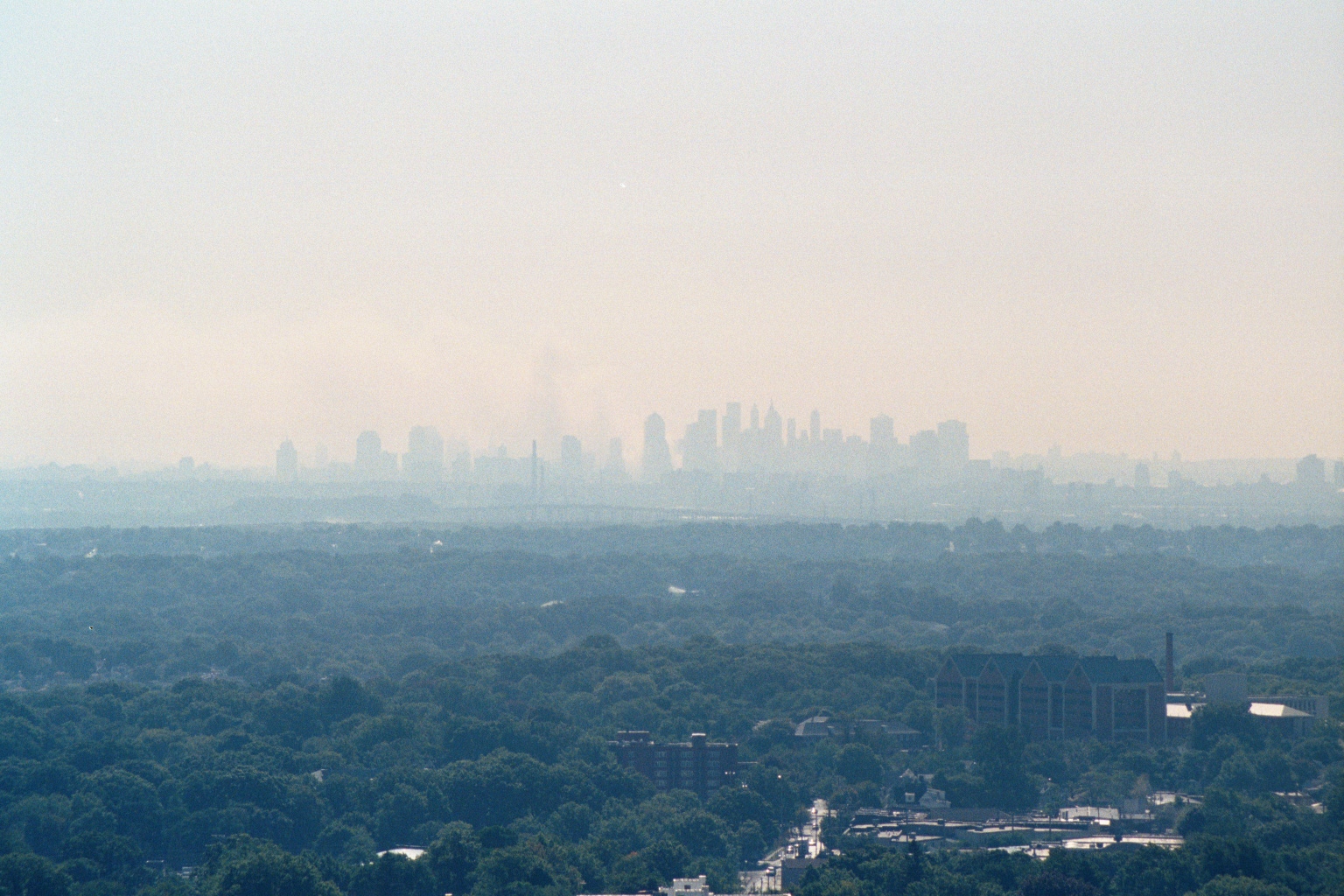
The World Trade Center was a part of my life at home too. Specifically, I had an apartment in Montclair, NJ that had a stunning view of the entire New York City skyline. Happily, I was able to snap this picture in the summer of 2001.
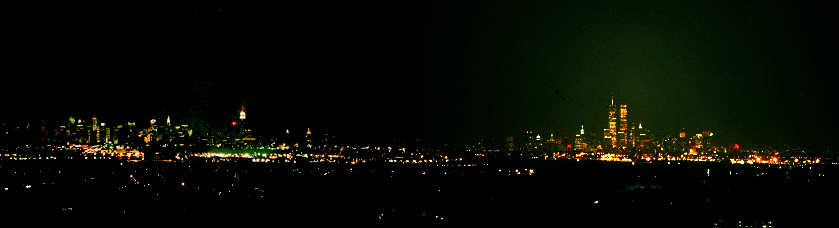
There would be nights I’d just open the window and gaze at the skyline, watching all the constantly moving cars, the flashing lights, the different colors of the Empire State Building, and in the distance even see tiny neon lights of the city that never sleeps. While I lived alone at the time and sometimes felt a little lonely, there was something comforting about looking out at the city so full of life.
In mid-August 2001, I was laid off from my job at Merrill Lynch. The Internet bubble was on the verge of bursting, and the bankers as always were the first to know about it. I remember a bunch of team members and I were called one by one into the conference rooms and told to leave the building immediately. I remember seething with anger as I rolled my office belongings to the elevator and out the building. Of course, I had questions for God. What was the meaning of this? Why would I have been hired just two years ago only to be unceremoniously let go?
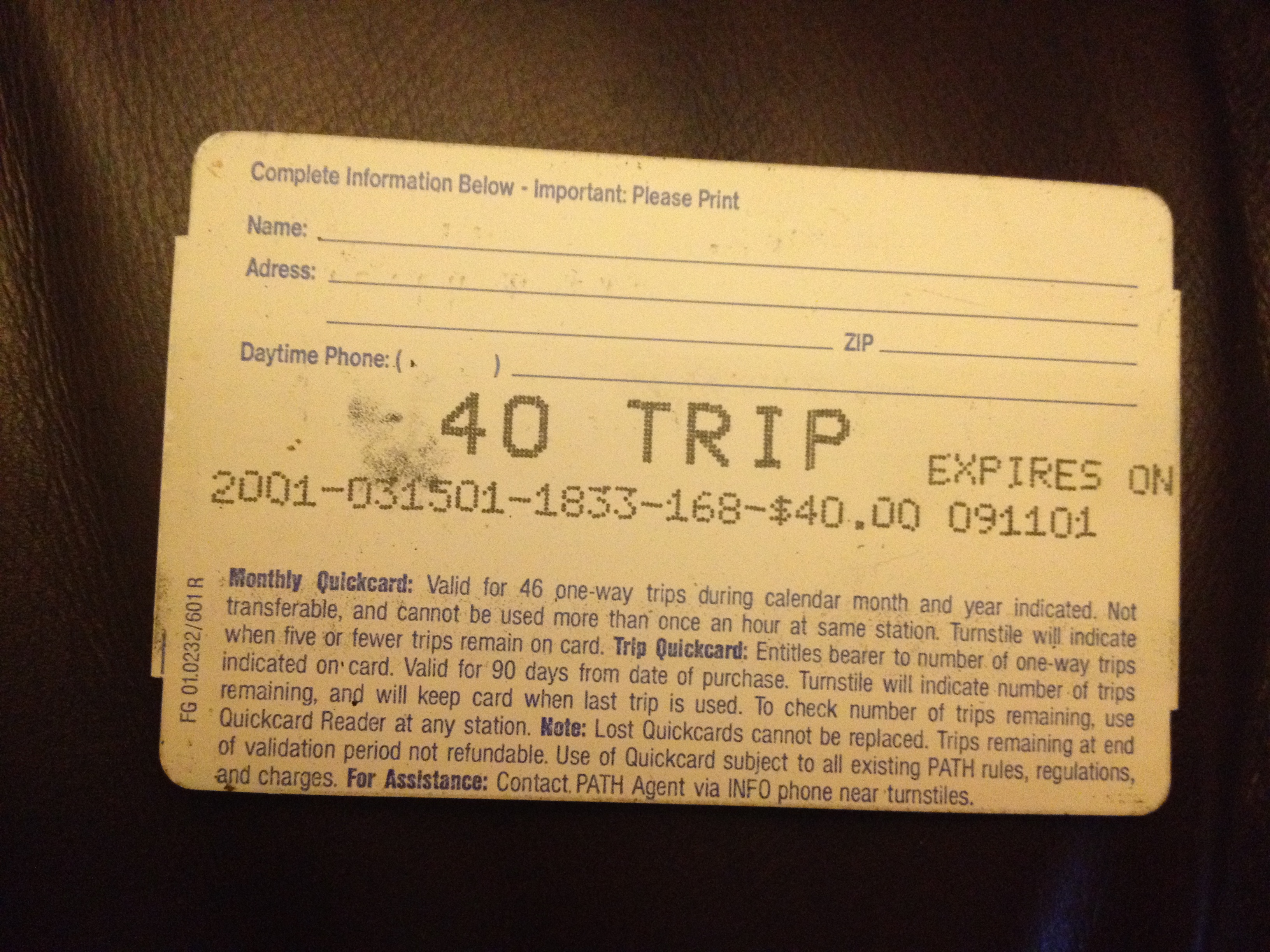
I used to buy 40 Trip cards on the PATH train, and I remember I had exactly one ride left. Out of spite, I said that I’d make a special trip to Manhattan the day the card expired just to get my $1.50’s worth out of them
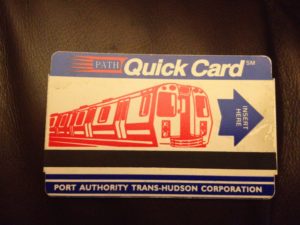
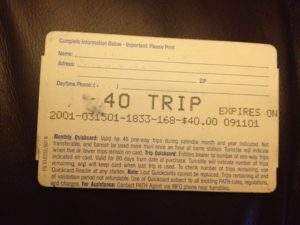
My plans that day were derailed when I had to travel to my church to meet with the electric company (I was a board member of the church back then).
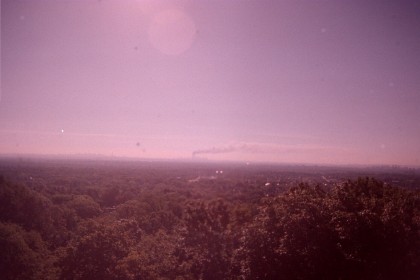
I remember getting ready to leave the house around 9 AM. I went to the windows to check the weather. I saw smoke in the distance.
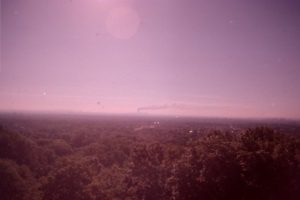
My first thought was…strange…I don’t remember there being a factory with a smokestack in that area of New Jersey. Then when I looked closer, I could see that the smoke was coming from the other side of the Hudson, and that it was the towers.
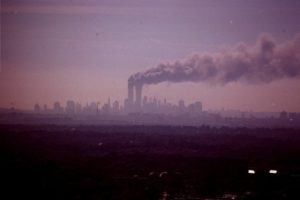
I flipped on the TV, and all I could see was static. I flipped to different stations, and all of them had static except for WCBS (Channel 2), which I later found was one of two stations that broadcast its signal from the Empire State Building instead of the World Trade Center. The morning news was one, and it showed a close-up of the North Tower with flames shooting out of the window. The news reporters were all over the place, but it didn’t take long after the second plane hit to know that this was deliberate.
My sister was living in California at the time and she called me to ask if I was okay. I saw by the window watching the scene when I saw one of the two towers just…disappear.
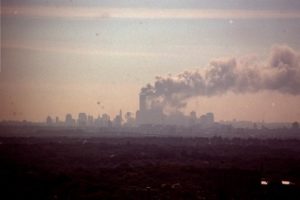
I stood there with my mouth open. My sister asked me what was going on. I couldn’t speak. I just blurted out…it’s…gone…it’s…gone. My sister didn’t believe me. She said she could still see both towers on the TV. But when the delayed feed caught up she could see what I was talking about.
My sister and I talked for a while and hung up, both of us in shock as the rest of the country was.
A half hour later, the North Tower collapsed too.
I sat by my window day and night, with my window open and the TV in the background with the Channel 2 reporters trying to make sense of what was going on. I just remember there being a mass amount of confusion. Some reports came in that planes were attacking other cities around the country. There were reports that the cloud of smoke was toxic. Finally, I had enough, I turned the TV off and just stared at the silence.
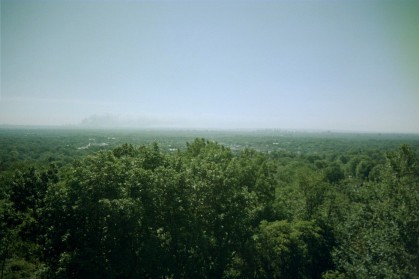
What was really strange about my vantage point was that I was so far away that I could see what was going on in the distance many miles away, but otherwise everything seemed like a typical beautiful September day. My apartment view was surrounded by mountains and trees. The only sound were the leaves rustling gently in the wind and the birds chirping.

The dichotomy was surreal. I knew that where that smoke was, there was chaos, and death, and cries. But where I stood, there was an eerie calmness, as if all the earth just stood still and was in as much shock as we all were.
I sat there all day as the sun set.
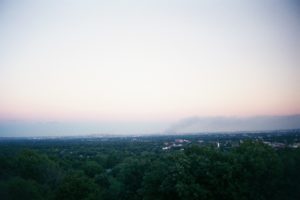
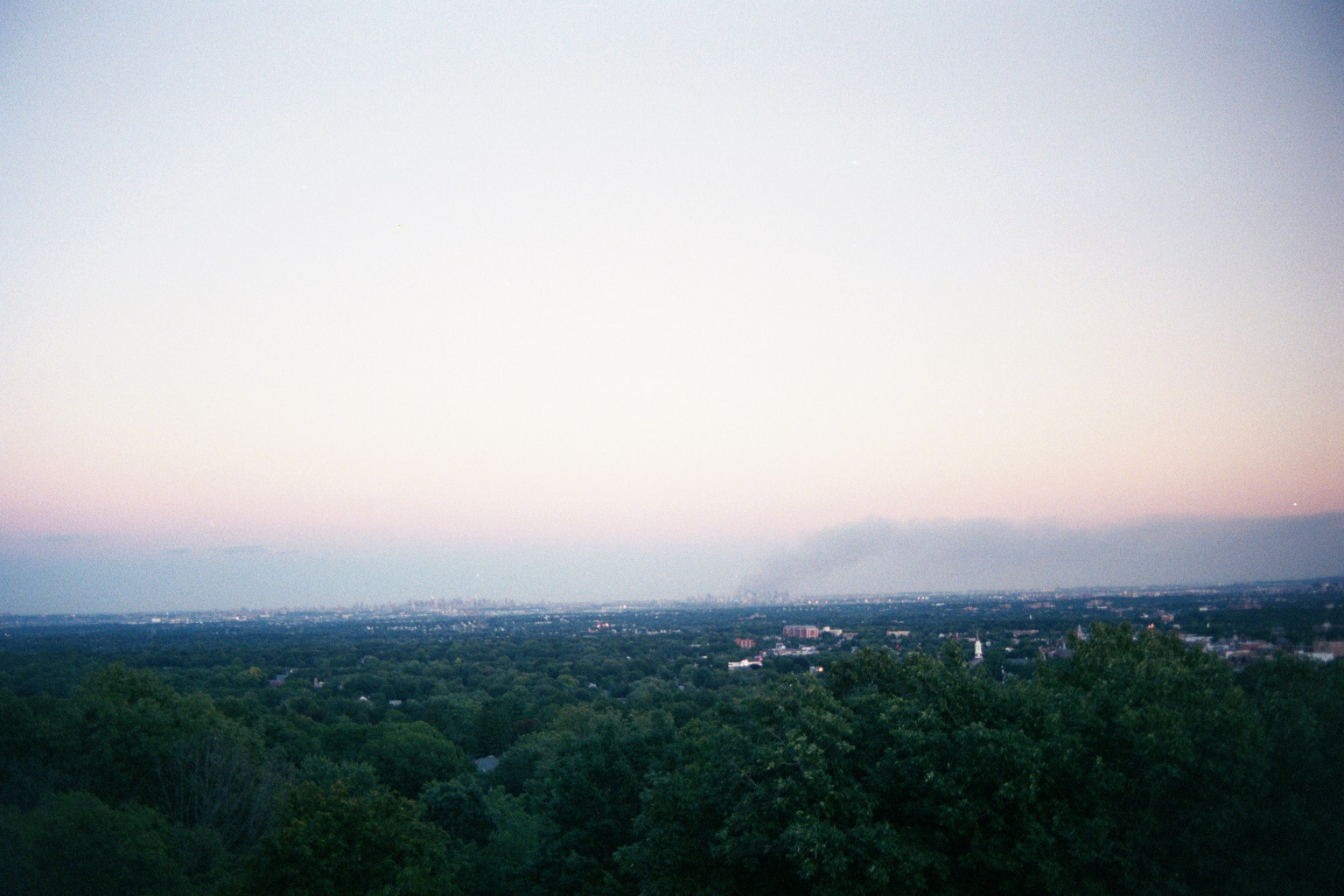
And then as dusk arrived…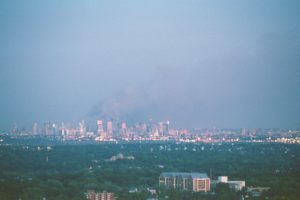
…and then darkness of night set in.
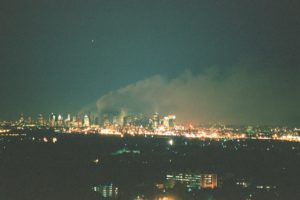
I stayed by the window and remained transfixed on the scene. The lighting patterns changed, which I knew meant that crews were setting up search and rescue teams, which sadly didn’t yield survivors and quickly turned into a recovery operation.
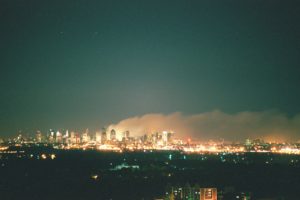
Like many Americans that night I didn’t get a wink of sleep. I just stayed glued to the open window. Finally, I closed the window and turned the TV back on. The only other channel that was working was Channel 31, a station that in those days was just broadcasting a 24 x 7 stream of The Worship Network every day. But instead of their usual images of scenery and hymns, there was just a screen with a close-up of an American flag slowly waving with hymns playing and Bible verses superimposed on the screen. After a whole day of watching destruction and despair, I can’t describe the comfort in hearing that music and reading those verses on the screen. To this day I’m not sure whose decision it was at WPXN to air that, but to this day I owe them a lot of thanks. I stayed up all night with those hymns playing in the background.
The sunrise over Manhattan, as it was many days, was stunningly beautiful. But today it was marred by the thick smoke that continued to billow.
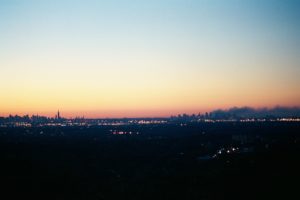
It seemed like an eternity before the smoke finally stopped days later. I remember watching the smoke patterns blow to the south and then to the north and then finally end.
I’d been so used to seeing the World Trade Center in the skyline since my childhood. When I looked at it now, it was hard to explain, but it just felt like there was a “hole” in the sky, as if a missing chunk had been taken away. Interestingly, most people I talked to from Manhattan said they felt exact same thing.
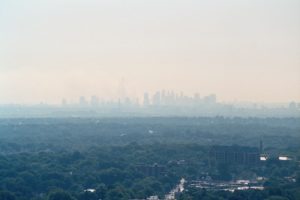
I had two windows in my bedroom that overlooked the City–one that had a view of midtown and the Empire State Building and the other that had a view of downtown. I would keep the shades drawn on that window from that day until the day I moved out of my apartment in 2005.
I remember the mood of the country then. The country on 9/12 was a much different country than it was on 9/10. While up to that point the biggest story in the news had been about a congressman who was accused of murdering an intern (he was eventually cleared of the charges, by the way), suddenly it seemed that the country knew that there were much more important things at stake. I remember that church attendance that weekend in churches around the country shot up. I remember the members of Congress gathering on the Captiol steps and singing “God Bless America” together. I remember the President calling the country together for a national day of prayer and remembrance. I remember praying a lot myself that week. Just walking around the area, it seemed that New York suddenly became a lot simpler, a lot more loving, a lot more caring. Radio stations were commercial-free, the TV stations I could see pre-empted all their programming to provide comfort to the City, and loud, offensive talk in the media seemed to make way for gentler talk. Could it be that we as a City and as a Nation were finally turning back to God?
I got my answer a few weeks later. I drove to central New Jersey to visit my Dad, who was living in Princeton, New Jersey. As I drove out of the New York radio airwaves and into the Philadelphia airwaves, for the first time in weeks I heard a commercial. It was a commercial for a sit-com on ABC TV that was airing on Channel 6 in Philadelphia. And I remember two lines in particular. In one, a woman was talking to a man, saying “your crotch is vibrating”, followed by a laugh track. In another, a man was saying “you can tell a lot about a woman from her undies”, followed by laughter.
It’s at this point that I felt sick and turned the radio off. I’m no prude, but on the other hand it just struck me how inane and meaningless all those things we consider “entertainment” were.
At that point I came to a realization. Yes, we were at war. But unlike a lot of the politicians thought, it wasn’t a war against militant Islam or even terrorists. It was a war, as the apostle Paul put it, “against the rulers, against the authorities, against the powers of this dark world and against the spiritual forces of evil in the heavenly realms.” In other words, it was a war against evil, a war against all those things that try to separate use from the love of God.
When I heard those commercials, I had a palpable sense that as a country, we’d already lost that war. And surely enough, just as quickly as the smoke cleared from Ground Zero, so too would the country go back to divisive politics, increasing immorality, and a culture that views God as the enemy and false idols such as money, business success, government bureaucracy, political power, and pop culture as the things to be worshiped and celebrated.
I often thought to myself…why wasn’t I in the City on September 11, 2001 as I’d intended to be? Not that my life would have necessarily been in danger, but regardless I was still spared a lot that day. A few months later I had lunch with my old colleagues. They told me how they had to walk back to their homes, in some cases miles and miles away, because traffic and transit were all stopped. Much worse than this, they described the unspeakable horrors they witnessed from the basement of my old office that day, how they could see and hear people jumping from the towers to their deaths.They described the terror they felt as they saw the thick cloud of debris envelop the entire downtown area, and wondering if they would survive.
What I thought was bad luck in being laid off in August 2001 turned out to be a blessing. On the 11th of September, instead of being in the middle of it all, I watched in peace and security from many miles away. I often thought about that.
I used to give little sermons from time to time in my church, and I wrote this one on September 29, 2001. And perhaps this is a good way to conclude my thoughts on September 11, 2001, because a lot of the points in here are more relevant today than ever.
I would be remiss, of course, if I didn’t mention the events of two weeks ago.
Like all of you, I obviously have thought a lot about this.
Whenever I look out the windows of my apartment, I still expect to see those twin towers there. Even today, I open the window in the morning and expect to see them there. But they’re not there.
And every time I see that huge horrible emptiness in the sky, I don’t want to think, but I can’t help but think of the 3000 lives that were lost there. You think of that horrific scene with the planes slicing through the roofs. You think of the scenes of people jumping to their deaths. I heard a friend describe how a friend of hers escaped from the tower, and after surviving that harrowing experience had to face one much worse–walking aside piles and piles of bodies. You all heard the stories of the rescue workers who found nothing but body parts. You still see around you people whose lives were forever affected by the horror they witnessed.
These are not images that you see on TV tens of thousands of miles away in an Indian earthquake or an African famine. These are people that one month earlier, I was passing every day in the PATH station, in the Borders bookstore, in the elevators.
It’s still all so unreal.
And then, I think to myself.
Why is it that I was so fortunate to have been laid off from my job downtown at the end of July, and to have been spared? I sometimes wonder what I would have done if I’d been in the city that day.
There was a picture on cnn.com of a group of men running with terror in their faces past a Mrs. Field’s cookie store on Fulton, with the towers collapsing behind them. That picture was taken across the street from my office at 222 Broadway. Would I have been one of those men running in terror in that picture?
There was a picture on abcnews.com of a co-worker of mine, holding up a picture of his missing mother. There was a sentence on ml.com talking about how my old Managing Director at Merrill Lynch, one of the most decent executives I’ve ever known, was one of those lost.
Of the 3000 that died, Why wasn’t one of them me? Why wasn’t one of them you?
Let’s turn to Luke 13:1.
Now there were some present at that time who told Jesus about the Galileans whose blood Pilate had mixed with their sacrifices. Jesus answered, “Do you think that these Galileans were worse sinners than all the other Galileans because they suffered this way? I tell you, no! But unless you repent, you too will all perish. Or those eighteen who died when the tower in Siloam fell on them–do you think they were more guilty than all the others living in Jerusalem? I tell you, no! But unless you repent, you too will all perish.”
Then he told this parable: “A man had a fig tree, planted in his vineyard, and he went to look for fruit on it, but did not find any. So he said to the man who took care of the vineyard, `For three years now I’ve been coming to look for fruit on this fig tree and haven’t found any. Cut it down! Why should it use up the soil?’
“`Sir,’ the man replied, `leave it alone for one more year, and I’ll dig around it and fertilize it. If it bears fruit next year, fine! If not, then cut it down.’ “
Why wasn’t it me? Why wasn’t it you?
Was it because we are Christians?
Was it because we are not sinners, and that only those who were guilty of sin perished and witnessed the horror of that day?
Why did those people in our towers die?
Some people will say things like…oh, they worked in New York, so they made the big bucks…they knew what risks they were taking.
Or, they just made the wrong combination of choices in their life that made them end up at the wrong place at the wrong time.
You start to rationalize into thinking that somehow you’re a better person than they are… that’s why you weren’t destroyed with them…. like those Jesus spoke to regarding the tower of Siloam, you start to imagine that there’s some reason besides sheer time and chance that spared your life over theirs.
You believe this, until you hear the stories. The man who sat with his friend in the wheelchair, a friend who was unable to get downstairs, and died together with him. The firemen and policemen who ran up the stairs to their certain deaths, even as everyone else was running down. You heard of the man who started the day boarding a plane in Newark, never thinking that he would end his life on the 90th floor of the World Trade Center, and yet in his hour of death, he asked a 911 operator to say the Lord’s Prayer with him and to tell his wife, two kids, and one unborn child that he loved them. You’ve heard all these stories and more.
Those people in the towers weren’t any different than you or me. If anything, they were better people, and better Christians.
So why are we sitting here safely?
God is giving us time…we have not borne fruit for him yet, but as the axe is lifted against the base of the tree, even now he is shouting STOP. Leave it alone…I’ll dig it around and fertilize it…I’ll provide this tree with safety…and security…and my Word…perhaps after all this, this tree will bear fruit. Perhaps they will look after orphans and widows in their distress. Perhaps they will keep themselves from being polluted by the world. Perhaps they will learn what this verse means: “For I desire mercy, not sacrifice, and acknowledgment of God rather than burnt offerings.”
You see, God spared me and spared you because there’s still work for us to do on this earth for His kingdom. I think most of us realized that on that September 11th 11 years ago, no matter where we were. But in the eleven years since…well…I guess as most of us got complacent to the new reality, so too did we forget the promises we made that day.
And so on anniversaries like this, it’s a good idea to step back and remember that day. Remember all the things you said you were going to do, whether it was to give blood or to donate to charity or to call that friend you haven’t called for years or to go back to church for a day or just to get on your knees and pray for God to show you what He wants you do to. As I popped in the CD of images I took on 9/11 to write this post, those were the thoughts that flooded into my head. I hope, if just for a brief time, they stay there and remind me not to stay complacent again.


 The first book I chose was
  cover-to-cover. I’ve heard amazing things about his book on
  , but unfortunately I haven’t gotten a chance to finish it yet, as it’s the kind of book you really need to read without much interruption, and that kind of time is kind of hard to find in my life these days. And admittedly, my attention span is more of the Twitter variety than the War and Peace variety, so I really need to get myself in the mood to read a 600 page book, no matter how well-written it might be.